
Table of Contents
- Energy-Efficient Windows
- Smart Glass Technology
- Double vs. Triple Glazing
- Popular Window Styles
- Material Considerations
- Installation and Maintenance
- Cost and Return on Investment
- Final Thoughts
Modern window innovations have transformed residential spaces, making homes more energy efficient, comfortable, and visually appealing. With a wide range of new technologies and materials available, finding the right solution for your home’s needs is easier than ever. For homeowners in Flagstaff and surrounding areas looking to upgrade, exploring residential windows Flagstaff can open a world of high-performance window options tailored for both efficiency and style.
Technological advances mean windows are no longer just panes of glass. They now actively contribute to temperature regulation, noise reduction, and even smart home integration. Selecting the best options depends on factors such as climate, desired aesthetics, and budget, empowering you to create a well-insulated home with modern curb appeal.
Energy-Efficient Windows
Windows engineered for energy efficiency are a cornerstone of a modern, sustainable home. Features such as Low-E (low emissivity) coatings reflect unwanted UV and infrared light while allowing visible sunlight to pass through. Panes filled with argon or krypton gas further reduce heat transfer, keeping interiors more consistent in temperature throughout the changing seasons. According to the U.S. Department of Energy, upgrading to high-efficiency windows can cut household heating and cooling costs by up to 25 percent, saving homeowners hundreds of dollars annually.
Smart Glass Technology
Smart glass is quickly gaining popularity for its ability to adapt to the changing environment. These electrochromic windows adjust their tint in response to sunlight and user preferences, instantly reducing glare and heat gain during the day. At night, the glass becomes transparent again, offering an unobstructed view. By reducing reliance on window coverings and improving thermal efficiency, smart glass balances comfort and energy use with the push of a button or through automated systems, as detailed in innovations covered by Architectural Digest.
Double vs. Triple Glazing
Double and triple glazing refer to the number of glass layers separated by insulating spacer bars within a window unit. Triple glazing is renowned for its superior insulation capabilities. It significantly reduces heat loss, reduces outdoor noise, and virtually eliminates the cold-glass feeling during winter. However, the additional cost and weight make it best suited for colder regions where the performance gap from double glazing justifies the investment. In many climates, modern double-glazed windows with top-tier coatings and thermally improved frames offer substantial energy savings at lower cost and with less complexity.
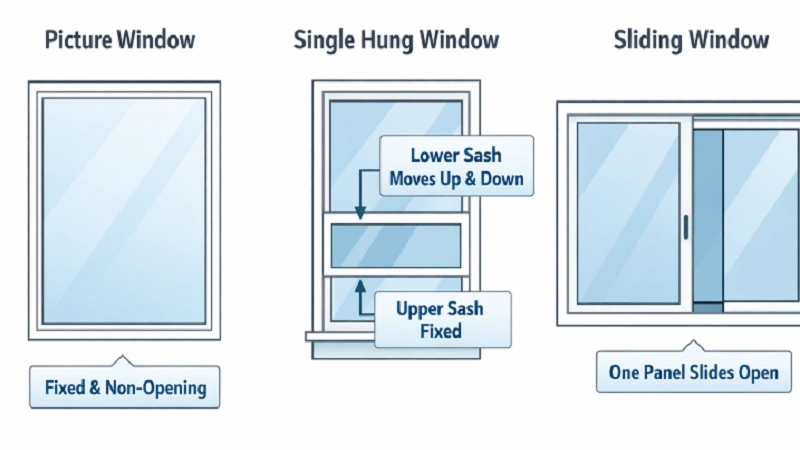
Popular Window Styles
Selecting a window style can affect ventilation, lighting, and the overall look of your home. Here are some leading choices for modern buildings:
- Picture Windows:Non-opening, large windows designed for maximizing natural light and framing outdoor views. Their fixed design also prevents drafts and ensures high energy efficiency.
- Single Hung Windows:Traditional in style with functionality in mind, these windows feature a movable lower sash and a fixed upper sash, offering a practical blend of airflow and affordability.
- Sliding Windows:With horizontal movement, sliding windows are ideal for spaces where vertical opening is limited. Their contemporary aesthetic and ease of operation make them popular in modern homes.
Material Considerations
The durability, appearance, and performance of your windows are largely influenced by frame material. The most common choices include:
- Vinyl:Praised for its affordability, durability, and minimal upkeep. Vinyl frames hold up well against moisture and temperature fluctuations, resisting common problems like warping and fading.
- Wood:Offers timeless beauty and excellent insulation, but requires routine maintenance and is priced higher. Suitable for traditional homes or those aiming for a classic look.
- Aluminum:Lightweight, slim, and robust, aluminum is perfect for large window openings and modern aesthetics. However, it’s less energy efficient unless it includes a thermal break.
- Fiberglass:Highly durable and energy efficient, fiberglass frames resist swelling, rotting, and warping, and can be painted to match any color scheme. Their higher cost is balanced by longevity and minimal upkeep needs.
Installation and Maintenance
Proper installation is critical to ensure energy savings and weather resistance. Even the best window technology can underperform if not correctly installed, so it is wise to hire professional installers familiar with the latest products and techniques. Once installed, simple tasks like periodically cleaning glass and frames, lubricating tracks, and checking seals for gaps or wear will keep your windows functional for years.
Cost and Return on Investment
The upfront cost of modern windows varies widely, depending on materials, glazing, and features. While quality window installations represent a significant investment, the benefits include lower energy bills, improved comfort, reduced maintenance, and boosted property value. Many areas also provide incentives or rebates for energy-efficient upgrades, further improving your long-term return.
Final Thoughts
Modern window solutions are more than just aesthetic upgrades. They provide tangible benefits in comfort, energy conservation, and home value. By focusing on key considerations such as efficiency ratings, smart technology, frame materials, and professional installation, homeowners can ensure their investment delivers lasting returns. Whether updating a historic property or building new, today’s window options deliver a winning combination of innovation and elegance.