
Key Takeaways
- Define clear, achievable goals using the SMART criteria.
- Break down long-term objectives into manageable short-term tasks.
- Regularly review and adjust your plan to stay aligned with evolving priorities.
Creating a five-year plan is one of the most effective ways to gain clarity and control over your future. By establishing a clear vision and constructing a strategy to guide your actions, you can align your daily efforts with your long-term aspirations. Whether you are considering career advancement, personal growth, or a combination of both, a thoughtfully crafted five-year plan ensures your journey has direction and purpose. To begin outlining your goals, ask yourself questions like: where do you see yourself in 5 years? By reflecting honestly, you can start constructing a framework that propels you forward in meaningful ways.
Setting out with intention, a five-year plan allows you to approach opportunities and obstacles with greater certainty. It is not only about the final destination, but about equipping yourself with the confidence and tools to navigate life’s changes thoughtfully. This approach fosters resilience and encourages you to make proactive choices rather than react to circumstances as they arise.
Your five-year plan can serve as a personal blueprint, balancing both aspirational targets and practical steps. The process helps you identify gaps in your current skills or resources and provides regular checkpoints for assessment. This increased self-awareness empowers you to ask for feedback and seek guidance from mentors or peers.
Dedicating time to develop and revisit your plan builds a habit of goal-oriented reflection, which is associated with increased satisfaction and achievement.
Understanding the Importance of a Five-Year Plan
A structured five-year plan is more than a list of wishes. It serves as a guiding document that keeps you focused on what matters most. Individuals who take the time to forecast their future benefit from increased motivation and reduced stress when making important life decisions. Research has shown that goal setting is closely linked to increased performance and satisfaction in both professional and personal contexts. By articulating clear objectives, you prevent drifting through life reactively and instead cultivate a growth-oriented mindset.
Setting SMART Goals
The foundation of every successful five-year plan is effective goal-setting. The SMART framework provides a proven method for establishing objectives that are specific, measurable, achievable, relevant, and time-bound. Following this structure enables you to transform broad ambitions into actionable, trackable steps.
- Specific: Define clearly what you want to achieve and why it matters.
- Measurable: Set benchmarks to help you evaluate your progress along the way.
- Achievable: Choose goals that are realistic within the context of your resources and constraints.
- Relevant: Ensure each goal supports your overall vision.
- Time-bound: Assign deadlines to each objective to sustain urgency and momentum.
For example, instead of “I want to improve my skills,” a SMART goal would be “I will complete a project management certification within 12 months.” This approach allows you to monitor your progress and celebrate tangible achievements.
Breaking Down Long-Term Goals
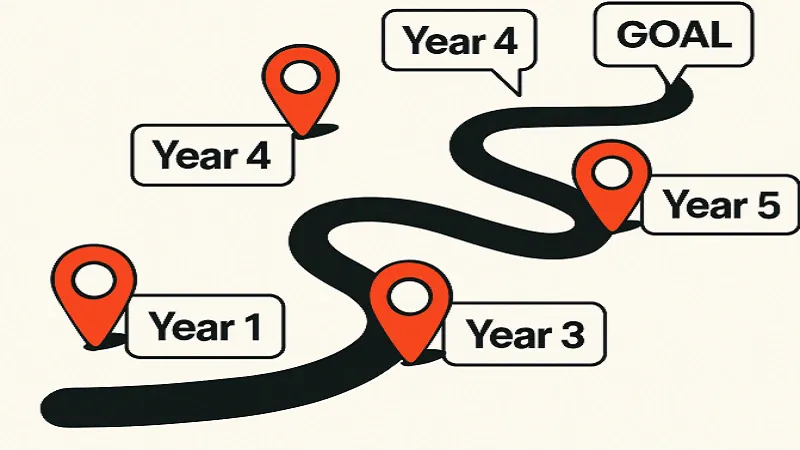
Large objectives can feel overwhelming, so breaking them into small, sequential milestones makes them approachable and easier to accomplish. If your overarching aim is to earn a promotion or start a business, start by plotting annual targets, then map quarterly or monthly tasks. For instance, those aiming for a managerial position might set the following path:
- Year 1: Enroll in leadership training programs.
- Year 2: Lead a small team project to gain experience.
- Year 3: Seek mentorship from experienced managers.
- Year 4: Apply for available managerial positions.
- Year 5: Secure your targeted management role.
This process gives you regular wins, increasing motivation, and providing opportunities for reflection and refinement.
Balancing Personal and Professional Objectives
While professional goals are critical for career growth, personal development deserves equal attention. By setting targets in areas such as physical health, relationships, and creativity, you create a balanced, sustainable plan. This comprehensive approach minimizes the risk of burnout and ensures fulfillment across all aspects of your life.
Regular Review and Adaptation
Flexibility is crucial in a dynamic world. Revisit your plan at least quarterly to track progress and address new hurdles or opportunities. Adjusting your targets ensures ongoing relevance while maintaining motivation. Life’s circumstances can change suddenly, so a regularly updated plan remains actionable and attuned to your evolving priorities.
Seeking Support and Accountability
Working towards significant goals is easier with a strong support system. Share your plan with trusted friends, colleagues, or professional coaches who can provide valuable insights and constructive feedback. Being open about your objectives creates accountability, while hearing other perspectives can refine your approach and help you navigate challenges more effectively.
Embracing Challenges and Celebrating Milestones
Obstacles will inevitably arise on the road to long-term achievement, but every setback is a learning opportunity. Approach difficulties with resilience and an open mind. Equally, make sure to celebrate each milestone, regardless of size. Marking progress reinforces your commitment and enhances morale, making the journey toward your vision more rewarding.
Conclusion
A well-constructed five-year plan is a powerful tool for achieving growth and success. By using SMART goals, breaking objectives into actionable elements, and maintaining regular reviews, you create a living document that adapts to your needs and ambitions. Life is an ongoing journey of growth. Embrace every step, celebrate your progress, and use your plan to guide you to a fulfilling future.