
Key Takeaways
- Effective basement apartment design enhances livability and property value.
- Addressing structural challenges and ensuring code compliance are essential.
- Incorporating natural light and proper ventilation improves comfort.
- Thoughtful layout and design choices can overcome common basement limitations.
Transforming your basement into a comfortable, livable apartment offers homeowners a unique opportunity to maximize space and boost property value. A successful basement apartment renovation goes beyond aesthetics and requires careful planning and adherence to essential best practices. Legal considerations are crucial at this stage, especially for those aiming to create a legal basement apartment that meets all safety and compliance requirements. No matter your vision, attention to foundational details and user needs will ensure your basement space is both inviting and functional.
Starting with a clear, thorough assessment of your basement’s condition, you must address structural barriers and ensure code compliance from the outset. This includes evaluating factors such as ceiling height, the presence of egress windows, and the effectiveness of moisture control systems. Thoughtful design choices, alongside practical considerations like ventilation and material selection, can help you overcome the challenges unique to below-ground living spaces.
Assessing Structural Integrity and Code Compliance
Before launching a basement renovation, a thorough evaluation of the existing structure and local building codes is critical. Homeowners should check ceiling heights, inspect for signs of moisture or cracks, and determine whether egress windows are present and compliant. Making these assessments early can save time and prevent costly setbacks later in the project. For example, a historic 1930s basement was transformed into an accessible living suite by addressing core challenges, including integrating universal design principles to enhance comfort and usability.
Maximizing Natural Light and Ventilation
Basements often struggle with low natural light and poor air flow. To enhance livability, consider installing larger windows or additional window wells where possible. Light-colored paint on walls and ceilings helps reflect what little natural light exists, while mirrors can add a sense of space and brightness. Introducing an appropriate mechanical ventilation system will further enhance air quality and minimize risks of damp or mold. Investing in air exchangers or dehumidifiers can make a significant difference in year-round basement comfort. The U.S. Department of Energy offers additional advice on basement ventilation in its Energy Saver Guidelines.
Optimizing Layout and Space Utilization
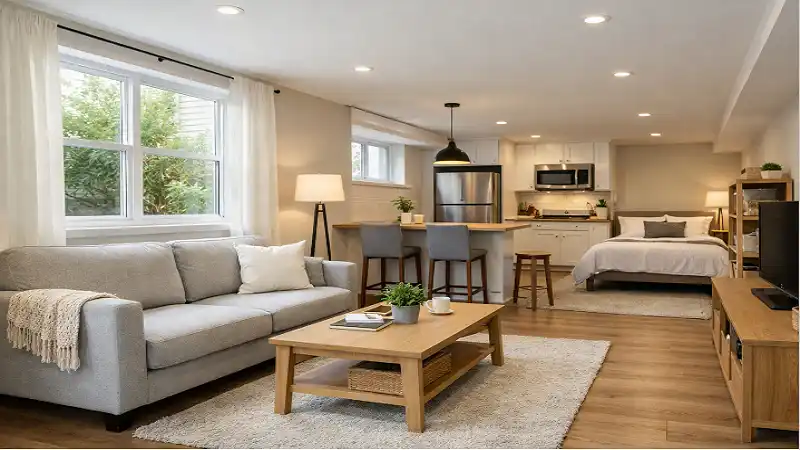
Careful planning of your basement apartment’s layout is key to ensuring lasting comfort and practicality. Open-concept designs make basements feel larger, while clear zones for living, sleeping, and eating maintain a sense of order and flexibility. Built-in storage units and furniture that can serve multiple functions help reduce clutter, making everyday living easier. Drawing inspiration from small-space renovations, such as flexible Manhattan apartments, can reveal creative approaches to maximizing functionality in compact environments.
Addressing Moisture and Insulation
Dampness is a persistent challenge in basement apartments. Water infiltration can cause structural damage and pose health hazards. Homeowners should install quality vapor barriers, seal any visible foundation cracks, and ensure sump pumps or drainage systems are in working order. Adding proper insulation to the walls and floors will stabilize temperatures and reduce heating and cooling expenses. Effective moisture management not only enhances comfort but also protects against long-term damage and high repair costs.
Choosing Appropriate Materials and Finishes
Material selection plays a crucial role in withstanding the unique conditions present in basements. Choose moisture-resistant flooring, such as luxury vinyl or ceramic tile, which holds up against potential leaks. Mold-resistant drywall and paint provide an added safeguard, creating a healthier environment for residents. These materials offer longevity and ease of maintenance, lessening the burden on property owners over time.
Incorporating Adequate Lighting
Since basements generally receive little natural sunlight, an effective lighting plan is essential. Combining ambient lighting from ceiling fixtures with focused task lights and decorative accent lights will help create a welcoming, well-lit environment. Recessed lighting is a popular choice for basements, as it saves headroom and provides broad, even illumination within a compact space.
Ensuring Accessibility and Safety
Accessible design ensures that your basement apartment is comfortable for all residents. Features such as expanded doorways, step-free entrances, and grab bars in bathrooms are essential for both convenience and safety. Don’t overlook critical safety considerations, including smoke and carbon monoxide detectors and sturdy, lockable entryways. These measures help prevent accidents and promote peace of mind for everyone who lives in or visits the apartment.Conclusion
Designing a basement apartment that delivers comfort and value requires thoughtful planning and strict attention to structural and regulatory details. Focusing on factors such as layout optimization, moisture control, appropriate materials, and quality lighting allows homeowners to unlock the full potential of their lower-level spaces. By following these best practices, you can create an inviting, practical, and legal basement apartment that meets the needs of its occupants—today and for years to come.
see more: redandwhitemagzcom